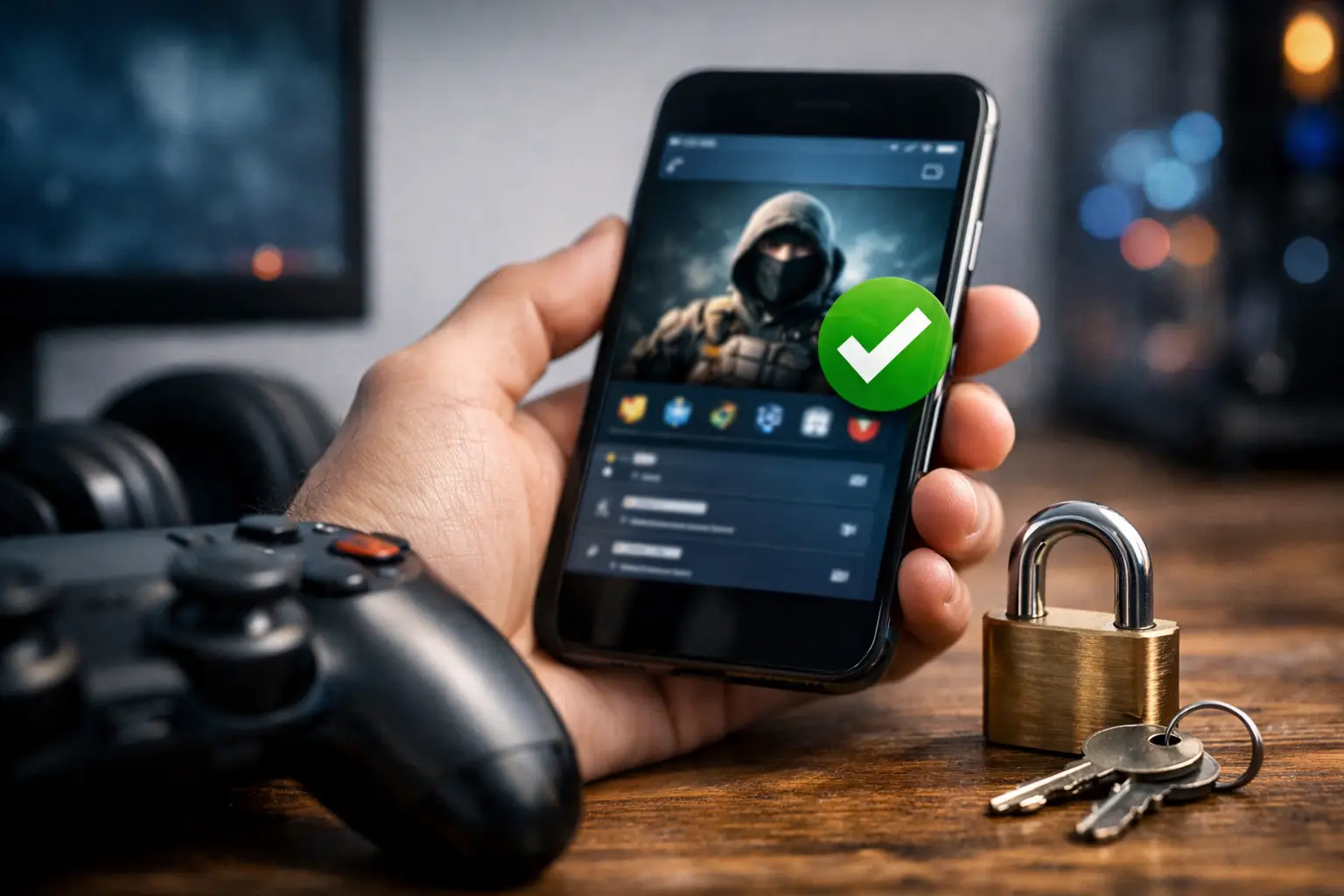
The real question is not just are verified game accounts safe to buy. It’s who you’re buying from, what “verified” actually means, and whether you’ll receive full control after payment. A verified account can be a fast, practical option if the seller is transparent and the delivery process is handled properly. It can also be a problem if the listing is vague, the ownership history is unclear, or support disappears the second the payment clears.
For most buyers, the appeal is obvious. You want an alt account without spending time setting one up from scratch, warming it up, or dealing with random marketplace sellers. You want to browse, pay, receive the login, and start playing. That part is simple. The safety side comes down to a few specific checks.
Are Verified Game Accounts Safe to Buy or Not?
Yes – sometimes. But “verified” by itself is not a safety guarantee.
In this market, verified usually means the account has passed a platform’s email, identity, or setup requirements, or that it comes with confirmed access details. That can make the account more usable than a raw or unprepared account. It does not automatically tell you whether the seller is trustworthy, whether the account was sourced cleanly, or whether you will keep long-term control.
That distinction matters. Buyers often assume verified means secure, permanent, and risk-free. It doesn’t. What it really means is that one part of the setup process is already handled. Safety depends on the seller’s process, the handoff quality, and whether you receive enough account access to change credentials and secure it for yourself.
What Actually Makes an Account Purchase Safer
A safe purchase usually looks boring in the best way. The listing is clear. The payment methods are recognizable. Delivery expectations are stated upfront. Support is reachable. You know what game account you’re getting, what level of access comes with it, and what happens if there’s a delivery issue.
Full access is one of the biggest factors. If you only receive a login and password, but not the email access or recovery control tied to the account, your position is weaker. You may be able to log in today and lose the account later. A stronger setup gives you the credentials needed to make the account your own after delivery.
Manual fulfillment also matters more than many buyers realize. When accounts are pushed through anonymous automation with no human oversight, mistakes are easier to miss. Wrong credentials, already-used details, or incomplete access can turn a fast purchase into a support mess. A manually handled order is not magic, but it often signals that someone is actually checking the product before it reaches you.
Clear after-sale support is another trust marker. If something goes wrong, you need a real contact point, not silence. That matters even more with digital goods, where delivery happens fast and issues need to be fixed fast too.
The Main Risks Buyers Should Understand
The biggest risk is account recovery. If the original control path still exists and the seller did not transfer everything needed to secure the account, the account may be reclaimed later. This is why “full access” is not just a nice extra. It is central to purchase safety.
The second risk is vague verification language. Some sellers use “verified” as a catch-all label because it sounds reassuring. But there is a difference between an account with confirmed email access and an account that is merely playable at the moment of sale. If the listing does not explain what is included, you are guessing.
The third risk is low-accountability marketplaces. Peer-to-peer platforms can offer volume, but they often come with mixed seller quality. One listing may be fine. The next may be copied, recycled, or supported poorly. When the seller identity is weak and the process is inconsistent, the buyer carries more of the risk.
There is also the platform-policy factor. Some games have terms that restrict transfers or sales of accounts. That does not mean every purchase fails, but it does mean buyers should be realistic. If you are purchasing an alt account, you should understand there is always some level of policy risk depending on the title and how the account is used.
How to Judge a Seller Before You Buy
Start with the product page. If the offer is serious, it should tell you what you are buying without making you chase answers. You should be able to understand the account type, the edition or tier, the delivery method, and whether full credentials are included.
Then look at the payment experience. Secure, recognizable payment options are a trust signal because they show the store is operating like a business, not just collecting money through whatever method is hardest to dispute. That does not remove all risk, but it raises the standard.
Support visibility is another easy filter. If a store mentions real support, manual delivery, or clear service expectations, that’s useful. If everything feels anonymous, rushed, or hidden behind generic claims, that’s a warning sign.
Refund and issue handling also matter. With digital products, the exact policy may vary, but the store should at least communicate what happens if credentials are wrong, access fails on arrival, or delivery does not happen as described. Buyers do not need legal essays. They need clarity.
What “Full Access” Should Mean in Practice
If you want to reduce risk after purchase, full access should mean you can change the important recovery and security details yourself. That usually includes access to the email tied to the account or the ability to replace it with your own quickly after delivery.
Once you receive the account, move fast. Change the password. Update the email if that is part of the handoff. Enable any available security settings. Review linked recovery options. The safer seller gives you the tools. You still need to finish the job.
This is one reason many buyers prefer a straightforward store format over random resellers. A store built around ready-to-use accounts usually understands that customers care about speed, but also about usable ownership. Fast delivery is good. Fast delivery with actual control is better.
Why Verified Accounts Appeal to Alt Account Buyers
For alt account buyers, convenience is the whole point. You may want a separate profile for ranked play, testing, region flexibility, sandbox experimentation, or simply keeping your main account untouched. Building that from zero takes time. Buying one removes that setup work.
Verified accounts are especially attractive because they cut down friction. Instead of receiving something half-finished, the buyer gets an account closer to ready. That’s valuable if the seller delivers exactly what was promised.
This is where a retail-style experience helps. A clean catalog, tiered options, secure checkout, and manual fulfillment create more confidence than a direct message from a stranger. That does not mean every store is equal, but it explains why buyers lean toward structured sellers such as ShopAlts rather than rolling the dice on a marketplace listing with thin details.
Are Verified Game Accounts Safe to Buy for Every Game?
Not equally. The answer depends on the game, the account history, and how strictly the platform handles transfers or suspicious activity.
For example, an alt account for a sandbox or casual-use case may feel lower stakes than an account tied to competitive ranking, region restrictions, or prior progression. Some titles are more sensitive to account changes than others. Some buyers only need a fresh secondary account to log in and play. Others care about long-term retention, customization, and progression security. The more you care about permanence, the more seller quality matters.
So if you are asking are verified game accounts safe to buy, the better version of the question is this: safe enough for what purpose? A fast-use alt account and a long-term primary-style account are not the same purchase decision.
The Smart Buyer’s Bottom Line
Verified game accounts can be safe to buy when the seller is clear, the account includes full usable access, the payment process is secure, and support is real. They are not automatically safe just because the word “verified” appears in the listing.
The buyers who avoid problems usually do the same few things. They read the listing closely, confirm what access is included, avoid vague marketplace offers, and secure the account immediately after delivery. That takes a little attention upfront, but it saves a lot of frustration later.
If your goal is speed, convenience, and a playable account without the setup grind, buying can make sense. Just treat the seller evaluation as part of the product. A fast account is only a good deal if you can actually keep control of it.